I. DIAPHRAGM

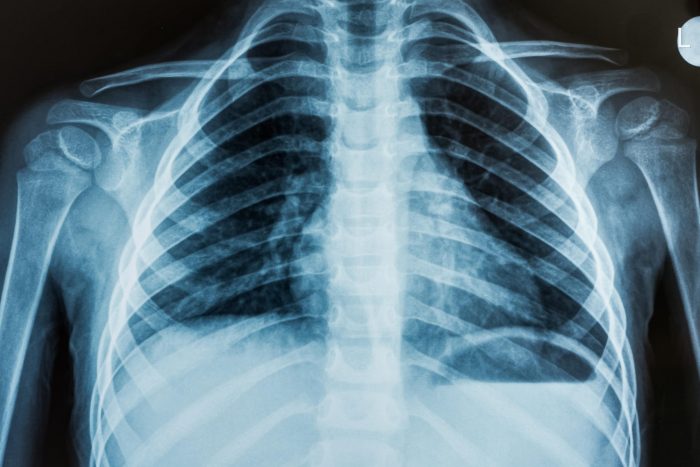
The diaphragm contracts around forty thousand times a day and you will never feel it once.
The body in the room was working like this. Absorbing the particular valence of a silence. The way a group’s posture shifts when something real is approaching. The seismic register of a lie being collectively maintained by people who have agreed, without discussion, to maintain it. Moderators took this in and responded before any intention had formed. A pivot in the questioning. A silence held two beats past comfort. A return, much later, to something said too quickly.
The transcript is what the lungs had already processed and expelled.
Language models process utterances. They are genuinely remarkable at utterances. They have no access to the dermis of a conversation: the proxemic shifts, the somatic contradictions, the involuntary signals the body emits while the mouth delivers something safer. More compute does not reach this. The model has never been in a room. Synthetic respondents answer in milliseconds about products they have never held, decisions their nervous systems have never been asked to make.
The industry is being rebuilt on exhaled air. And there is a possibility, not comfortable to sit with, that the exhaled air is what clients wanted all along. Cleaner. More consistent. Uncontaminated by whatever the body was doing.
II. VESTIBULAR SYSTEM

The vestibular system has no sensation in normal operation.
It lives in the inner ear and concerns itself with one thing: whether the body is falling. It does not announce itself while the ground is level. You find it only when the room tilts.
Experienced moderators had this. A group performing cohesion rather than experiencing it. A respondent whose agreement arrived without the small friction genuine assent produces. The dynamic had listed and something in the practitioner registered it before language did: something is off, something is off, something is off. Not a thought yet. A tilt.
Merleau-Ponty: perception arrives already interpreted. The body catches itself before the mind has issued any instruction.
But here is what is harder to say: the practitioner’s sense of reading the room was also, partly, a performance. The confidence of the tilt, the certainty that something was off, was not pure somatic signal. It was shaped by expectation, by professional identity, by the story moderators tell about what they uniquely do. The vestibular system can be fooled. Inner ears deceive. People feel the ground move when it hasn’t.
And if the moderator’s reading was partly performed, then what they were reading in respondents was also partly performance. Two dramaturgical systems in the same room, each detecting the other, each partially constructing what it claimed to find. The respondent performing candour. The moderator performing attunement. The tilt registered, the pivot made, the thing beneath the surface located and surfaced.
Not fake. But not unmediated access to human truth either. Something more like a skilled negotiation between performances, each one real enough to produce real consequences, none of it reducible to signal and noise.
This is what the automated system cannot replicate. Not because it lacks the somatic equipment, though it does. But because it cannot perform. It has no stake in the room, no professional identity requiring enactment, no need to be the kind of thing that reads rooms. The negotiation requires two parties who are both, in some sense, pretending. The loss is not of pure signal. It is of a particular kind of productive fiction.
What replaces this has no inner ear and no investment in having one. The room can list catastrophically and the system continues producing coherent output.
Whether that is a deficit or a form of stability is not a question this piece can answer.
III. FASCIA

Fascia is everywhere in the body and appears in almost no anatomy textbook.
Connective tissue. The thing that holds all the other things in relation to each other. For most of medical history it was cut through to reach the parts considered interesting. Inert, structural, beneath attending to. Then practitioners began noticing that when it was damaged, everything went wrong in ways that were hard to localise. The pain was diffuse. The dysfunction spread. The problem was in the connective thing, not the connected things.
The knowledge that skilled moderators carried was fascia. Not propositional, not extractable, not the sort of thing that survives being asked to explain itself. It accreted through hundreds of rooms, transmitted between practitioners who watched each other work, who stood behind mirrors together, who debriefed at the end of long days and said things they could not quite account for. It grew through the doing. It did not translate into documentation because documentation was not the medium it existed in.
But Baudrillard would have noted something the elegists miss. The simulation does not present itself as a substitute. It presents itself as an improvement. Synthetic respondents do not get tired, do not contaminate each other, do not perform agreement out of social anxiety or perform disagreement out of a need to seem discerning. They are, in certain measurable respects, more consistent than the bodies they replace. The map has eaten the territory and the clients prefer the map. It is legible. It is scalable. It does not have a bad day.
The question Baudrillard leaves open, and which the industry has not yet had to answer, is what happens when the hyperreal produces findings that the real would have contradicted. Not wrong exactly. Just native to a different order of reality. Optimised for a world that does not have bodies in it.
Nobody knows exactly what happens when you remove connective tissue. You find out downstream. By then the map is all there is.
IV. SPLEEN

Most people carry a spleen their entire lives without once thinking about it.
It filters. It cleans the blood of debris and senescent cells, quietly, without announcing itself, without requiring acknowledgement. You can live without one. People do. The body compensates. But the blood is subtly different afterwards, and certain vulnerabilities accumulate that would not otherwise be there.
The deflationary objection to all of this is that most moderation was never that good. The master practitioner reading the room’s limbic weather is real but rare. The overwhelming majority of focus groups were conducted adequately, by practitioners following guides, ticking topics, producing usable output nobody would mistake for revelation. If automated methods replace the median rather than the exceptional, the lament curdles into something elegiac about something that was mostly ordinary.
Fair. And still wrong.
The spleen is not the heart. Nobody writes poems about the spleen. But remove it and watch what accumulates in the blood over time.
When a practice community stops generating conditions for mastery, the ceiling does not lower. It forecloses. The exceptional stops being possible, and with it goes the industry’s vestigial sense that the ceiling existed. A generation inherits the methods. They use them competently. The output is structurally indistinguishable from what practitioners who could read rooms produced. The gap leaves no trace because the missing thing was always pre-data, always the thing before the thing.
You cannot mourn a sensation you were never given conditions to develop. The blood just gets subtly wrong and nobody agrees on why.
V. CORNEAL REFLEX

The corneal reflex is the blink you do not decide to make.
Something approaches and the lid closes before any instruction has been issued. Clinicians test for its absence when they need to know whether anyone is still home.
Something approaches. Nothing blinks.
The automated system that cannot read a room does not flag this. It produces output. Clean, coherent, deployable. The finding that would have existed, the redirected inquiry, the signal beneath the cover story, does not surface. Not suppressed. Not lost. Never found. The room is a server somewhere, humming. The instrument that would have caught it was a body and the body is not there.
Somewhere in thirty years of fieldwork a group fell quiet at the wrong moment. A practitioner’s body registered it. Said nothing, returned obliquely, found the thing beneath. The practitioner retired. What replaced them does not blink. The light comes in unimpeded and the neurological charts look absolutely fine.
It changed something downstream that nobody later traced back to a silence in a room.
Whether that matters depends on what you think research is for. The piece does not know. The body that would have known is no longer in the room.