I. JAW

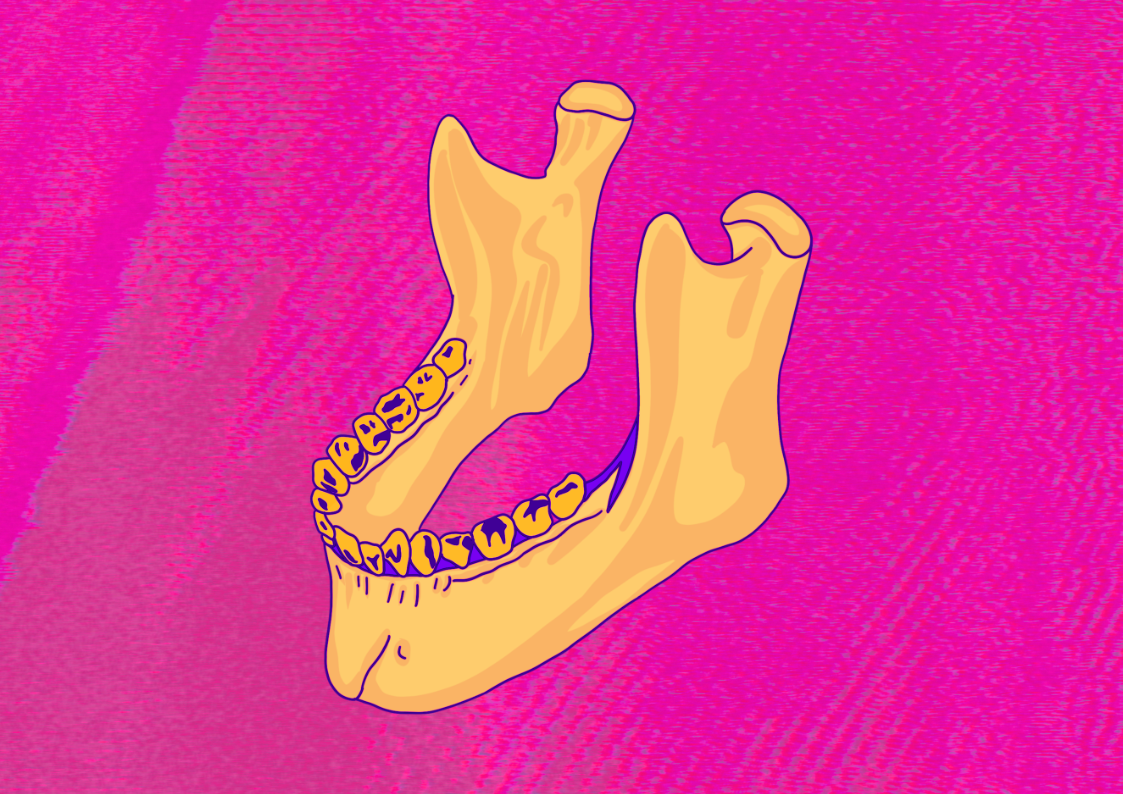
The masseter is one of the strongest muscles in the body relative to its size. It closes and does not release without instruction.
The screener arrives before the research, before contact with a human being, before anyone knows what the interesting thing will turn out to be. It removes, systematically, the respondents who use the category differently, who came to the product sideways, who carry the kind of experience that doesn’t profile cleanly. This is called quality control.
The jaw holds tension without releasing it. You can carry months of stress in the masseter without ever knowing. It clenches at night, grinds, holds what the rest of the body has nowhere to put.
The screened-out respondent is the jaw of market research, held, never allowed to speak, carrying the thing the research design could not accommodate.
There is a reasonable objection. Focus requires exclusion. You cannot listen to everyone. The screener is not cruelty; it is method. The sample has to mean something.
Conceded. And yet the screener is written before the research question is fully understood. It encodes the client’s assumptions about who the relevant human being is. It selects for a population that already fits the frame. The findings emerge from a room that was already agreed upon before anyone entered it.
The grinding continues and nobody is recording it.
II. BONE MARROW

Bone marrow produces around two hundred billion blood cells a day, in the dark, inside bone, without any external prompt.
Opinion arrives in the research room already made, the product of accumulated experience that began long before the recruiter called. The category the respondent has used or avoided for twenty years. The brand they associate, without knowing why, with a specific texture of feeling. The product failure that embarrassed them in front of someone whose opinion mattered. None of this is accessible from a discussion guide. It produced the response before the session started.
The marrow is where blood is made, not in the vessels the doctor examines, not in the circulation that carries oxygen and signal around the body, but in the dense interior of bone, invisible, structural, the source of everything that eventually surfaces. The blood is what the body shows you and the marrow is what makes it.
The researcher accesses the blood. The marrow is never in the room.
This is not a failure of method. No method reaches it. The skilled moderator knew this and worked obliquely, circling the thing rather than approaching it directly, trusting that the blood in front of them would reveal something about the source if the conditions were right. Not the source itself. A trace of it.
The synthetic respondent has no marrow, no accumulation, no prior category experience, no twenty-year history with the brand that shaped the response before anyone asked the question. It generates from pattern rather than from lived deposit. The output resembles blood.
The findings go to market. The actual thing is still out there.
III. VAGUS NERVE

The longest cranial nerve in the body runs from the brainstem to the gut, touching the heart, the lungs, the liver on its way. It does not carry instructions downward. Mostly it carries information up. Eighty percent of its fibres run toward the brain, not away from it. The body is reporting constantly and the brain is downstream of most of what the body already knows.
The respondent sitting in the research room is receiving information through this channel that will never reach the transcript. The slight unease when the moderator’s phrasing implies a correct answer. The physical relaxation when the room shifts and disclosure becomes possible. The visceral wrongness of a concept board that violates something the respondent could not name. These are neurological events, information moving through a system that predates language.
Good moderators learned to create conditions the vagus nerve would respond to, safety, warmth that was not performance, the specific quality of attention that tells a nervous system it is not being evaluated. This took years to develop and produced nothing documentable. The practitioner could not explain what they were doing because they were not doing it consciously. The nerve in the room was talking to the nerve across the table.
The deflationary reading is that this is mysticism with a biological gloss, that moderators were pattern-matching from experience and calling it somatic attunement. Possibly. That argument has never been settled and probably cannot be.
What the vagus nerve carries has no analogue in a synthetic research encounter. What goes undetected does not disappear. It surfaces later, elsewhere, in behaviour the research did not predict and the findings cannot explain.
IV. SWEAT GLAND

There are between two and four million sweat glands in the human body and none of them are under conscious control.
When the respondent is shown the prototype that embarrasses them, the body responds before the words do. A small thermoregulatory event occurs, imperceptible in most conditions, undetectable by any method in standard deployment, unremarkable to everyone in the room except, occasionally, an experienced moderator watching for something they cannot name.
The sweat gland is not performing. It has no access to the learned script, no awareness of the research frame. It simply responds to what is actually happening.
Market research has always known the body tells a different story than the mouth. It built an entire sub-discipline around this, spent decades and significant money on biometrics, eye-tracking, galvanic skin response, implicit association tests. The project was to capture the involuntary, to route around the performed answer and reach the actual one.
Most of this infrastructure was quietly abandoned, too expensive, hard to interpret, difficult to sell to clients who wanted a quotable theme.
Remove the only witness that cannot be coached and call it an efficiency gain.
V. EYELID

The survey was sent at 6pm on a Tuesday.
The respondent opens it at 10:53pm. The children are in bed. Something is running on the television. The eyelid is already halfway to its destination.
The data arrives clean. There is no field in the dataset for this, no flag for taken while exhausted, no code for cognitive resources depleted before question seven. The response looks identical to the one submitted at 9am by someone who was fully alert and mildly interested. The dataset does not know what the eyelid was doing.
Fatigue changes what people say, not in the direction of greater honesty necessarily, nor of greater distortion, but in the direction of less resistance. Acquiescence bias, the researchers call it, as though it were an anomaly to be corrected rather than a window into something real about how choices are actually made. Most choices are made tired. The survey at 10:53pm is, in this sense, ecologically valid.
The synthetic respondent is always rested, with no circadian rhythm, no accumulated decision fatigue, no history of the day that preceded the question. Every response arrives under identical conditions of readiness that no actual human being has ever brought to a market research instrument.
The objection is that this makes synthetic data cleaner, less noisy, more reliable. The researchers who make this argument are correct. They are also describing the removal of the respondent.
VI. FINAL MUSINGS
The body was always incidental to the design.
What is strange about the current moment is not that the body is being removed from the research encounter. It is that nobody is naming what leaves with it. The jaw that held the thing the screener excluded. The marrow that made the opinion before anyone thought to ask it. The nerve that was reporting upward throughout, unrecorded. The sweat gland that could not be coached. The eyelid that was almost closed.
The record will show that the data quality improved.